Calne House
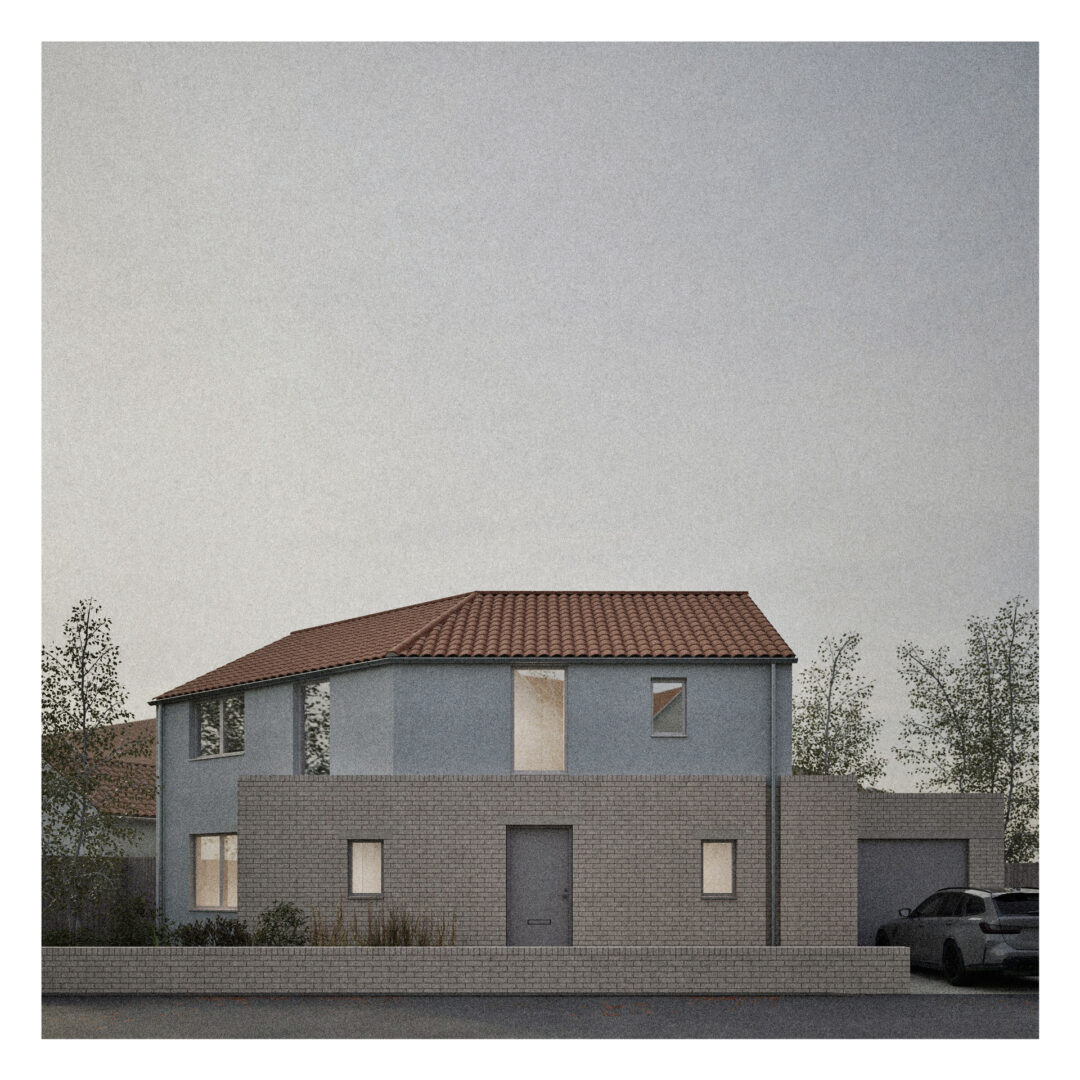


This new three bedroom detached dwelling, situated within a generous corner plot in Calne, Wiltshire, reconfigures a surplus garden site through a series of precise geometric interventions. The project is conceived as a sequence of interlocking masonry volumes that negotiate a challenging, angular site. The building’s footprint is cranked at 35°, a manoeuvre designed to optimise the southern orientation of primary living spaces while creating a sheltered, private garden to the rear. By prioritising a reductive formal language, the architecture draws attention to the weight of its construction and the tactile qualities of its primary materials.
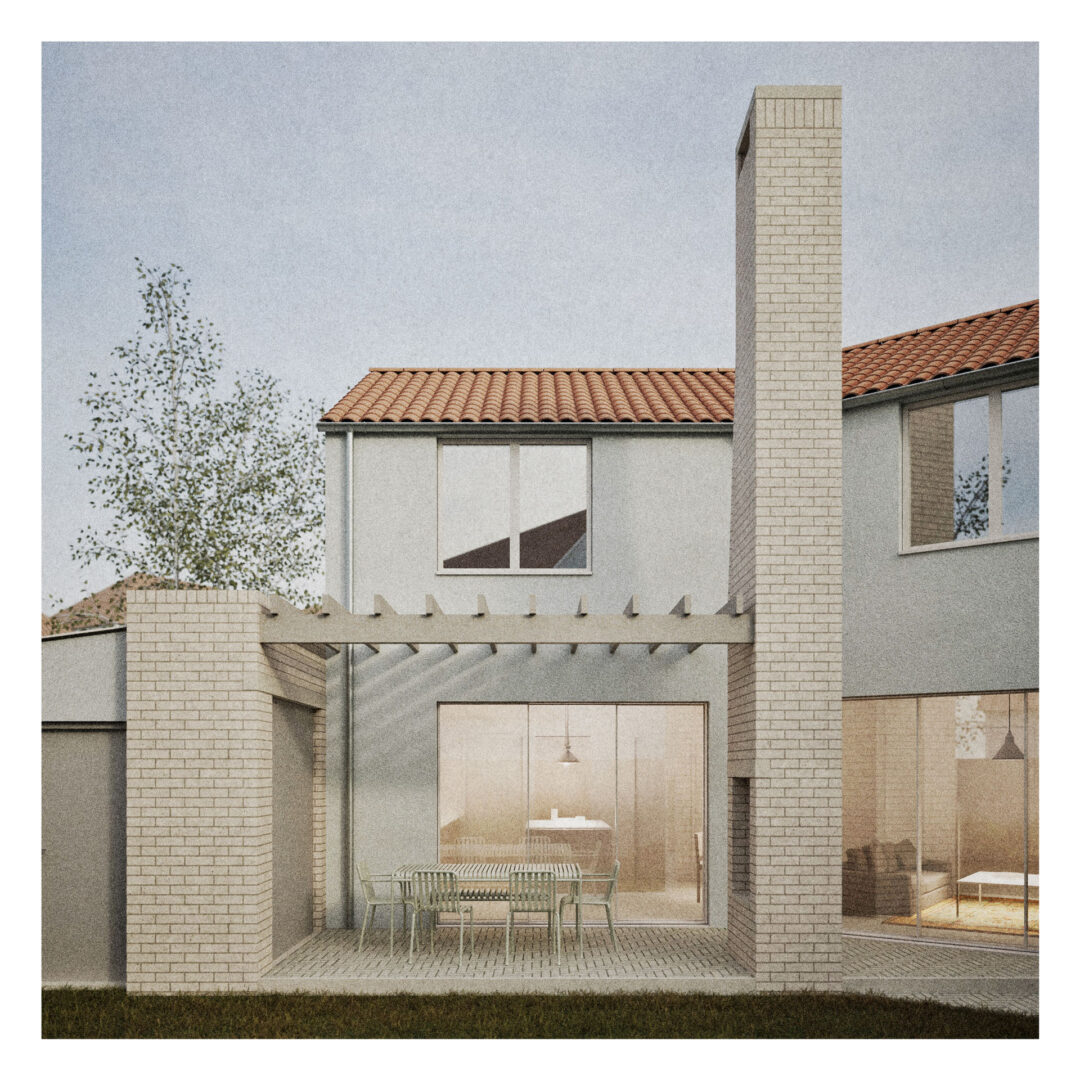
Internally, the plan is organised to prioritise light and spatial fluidity. The ground floor unifies cooking, dining and living areas into a singular, light-filled volume that opens toward a sheltered terrace. Every aperture is carefully positioned to frame views of the surrounding greenery, ensuring the domestic interior remains deeply connected to the seasonal rhythms of the site.
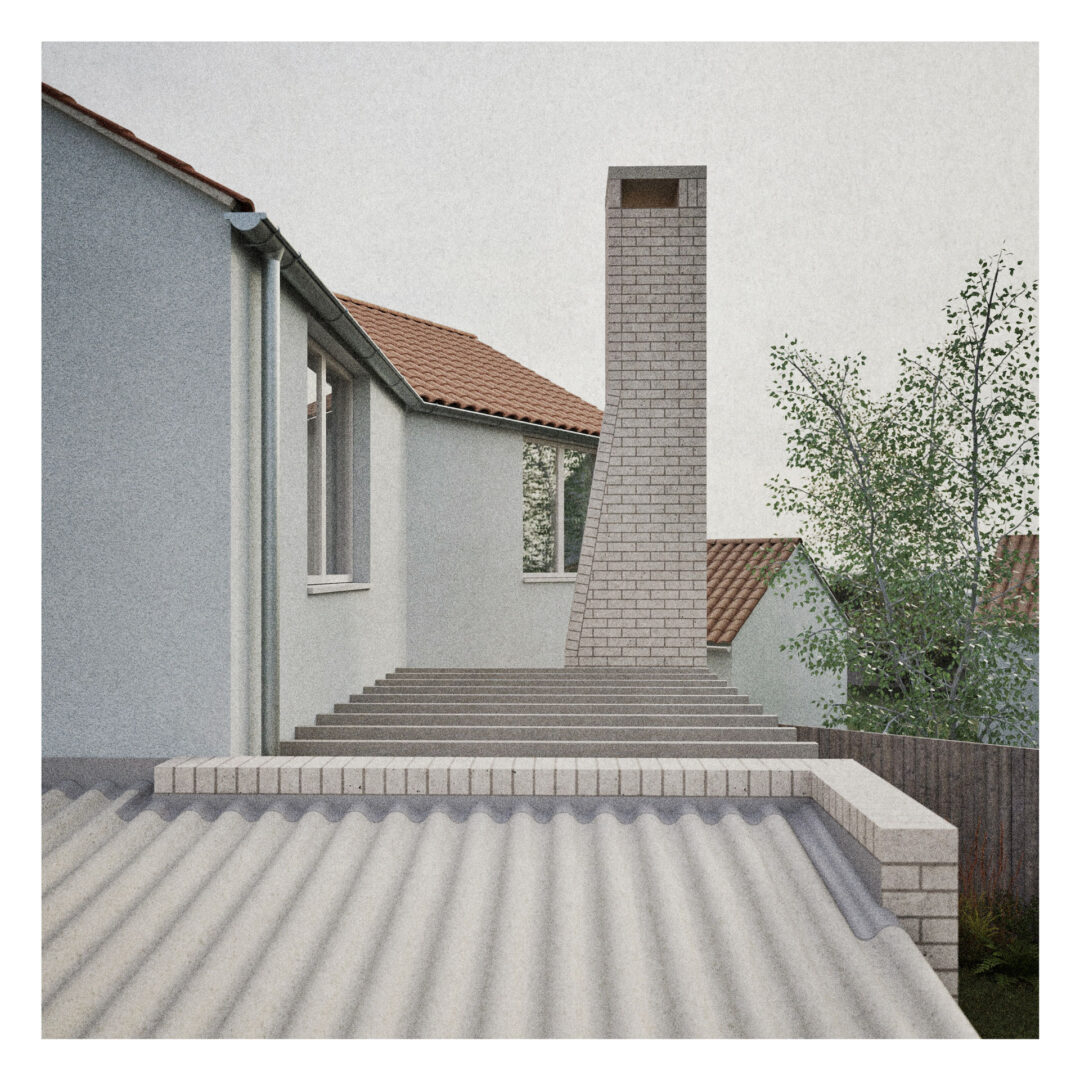
The house is characterised by a restrained palette of rough-textured brick and white render, set beneath a traditional terracotta clay-tiled roof. On the front elevation, a robust brick wall provides a sense of enclosure and privacy from the street, while the upper volume is faceted to follow the site’s unique geometry. This structural honesty is most evident on the rear facade, where a monolithic external brick chimney serves as a powerful vertical anchor. A timber-framed veranda extends from this masonry core, creating a dappled threshold to the south-facing living spaces and shielding the interior from excessive solar gain.
The project is underpinned by a rigorous ‘fabric-first’ sustainability strategy. By achieving U-values significantly beyond building regulations and utilising an airtight, thermal-bridge-free envelope, the design minimises its operational energy demand. This high-performance shell is integrated with an air-source heat pump, underfloor heating, mechanical ventilation with heat recovery (MVHR), and 3.6kWp of solar PV with battery storage. The result is an estimated 77% reduction in CO2 emissions beyond baseline requirements.