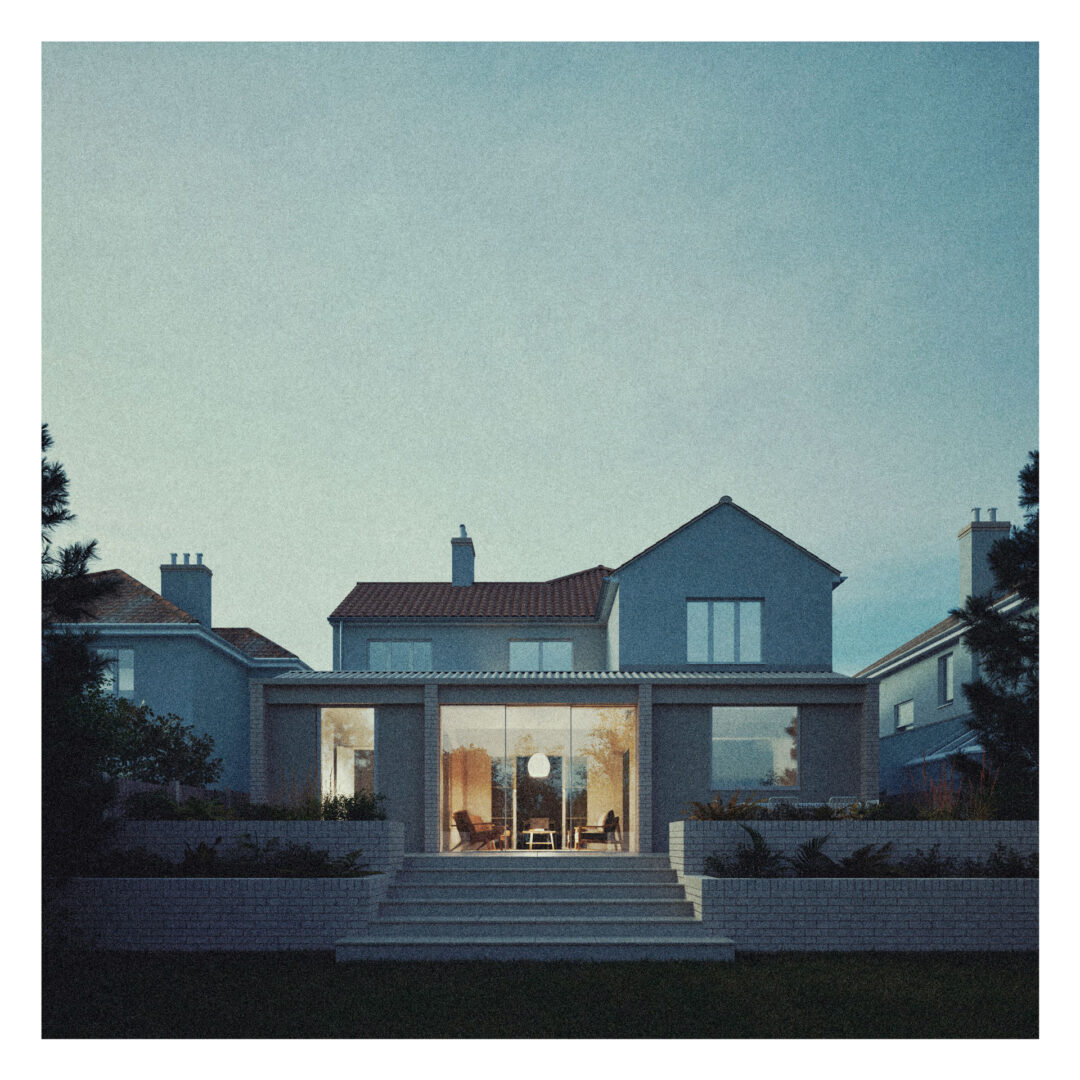
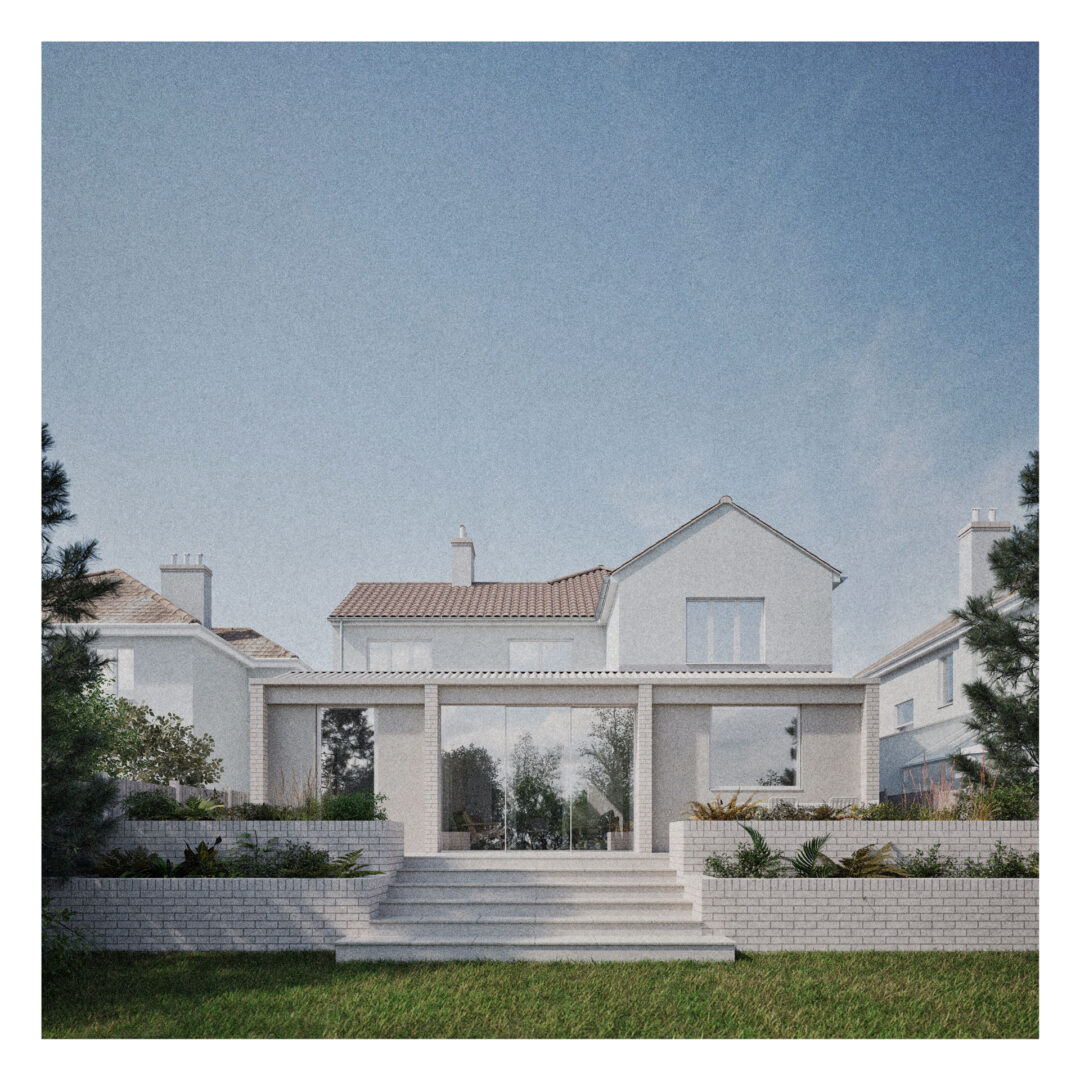
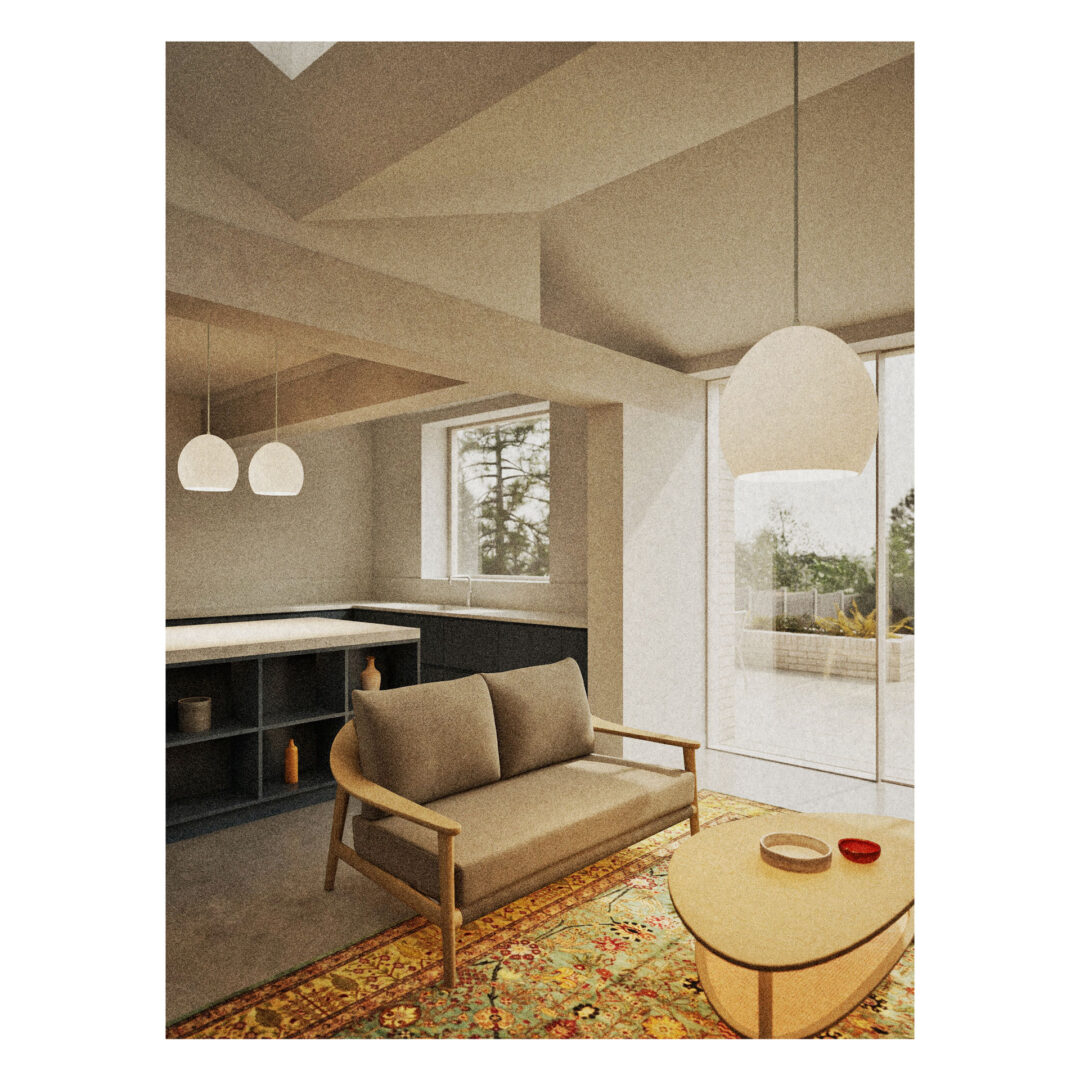
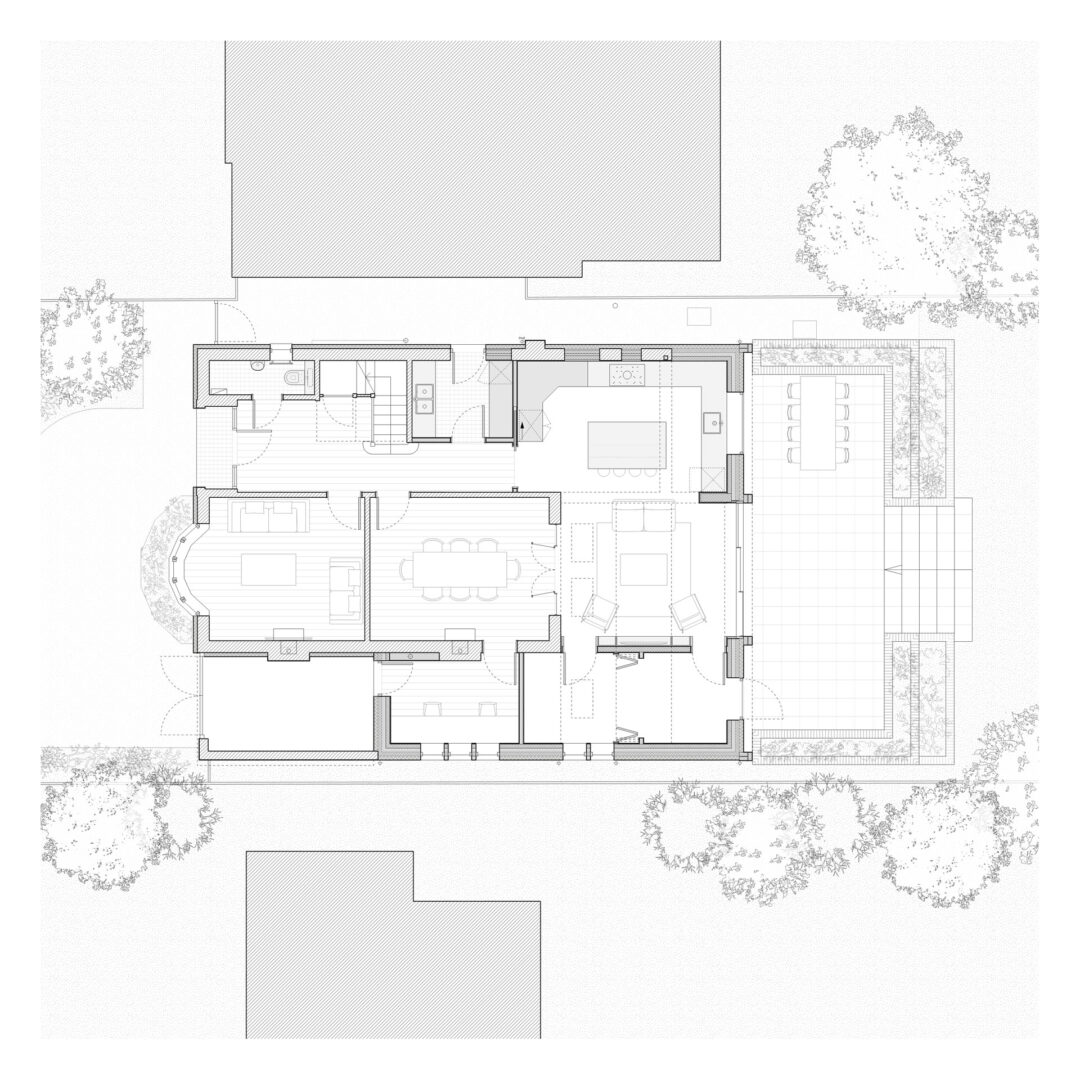
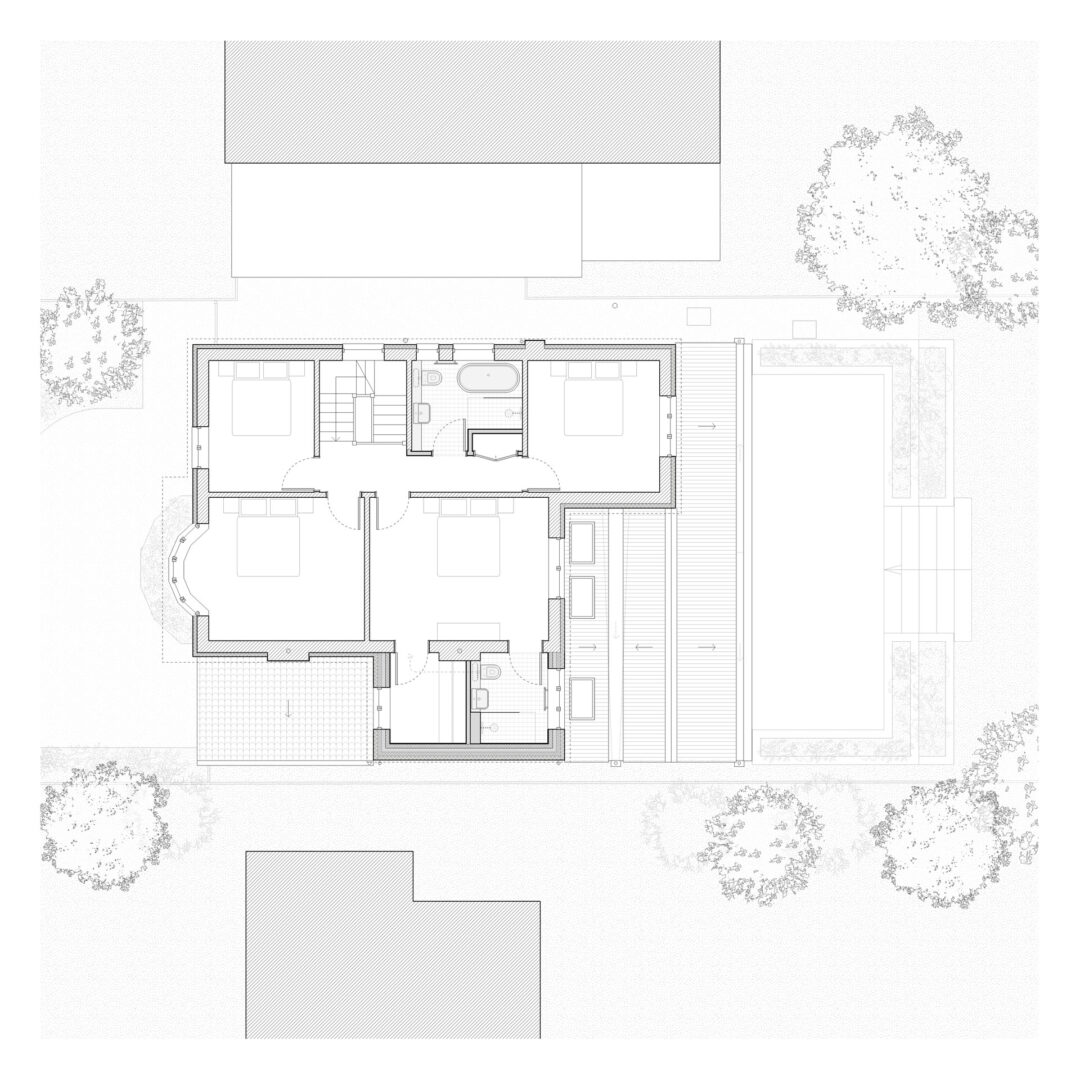
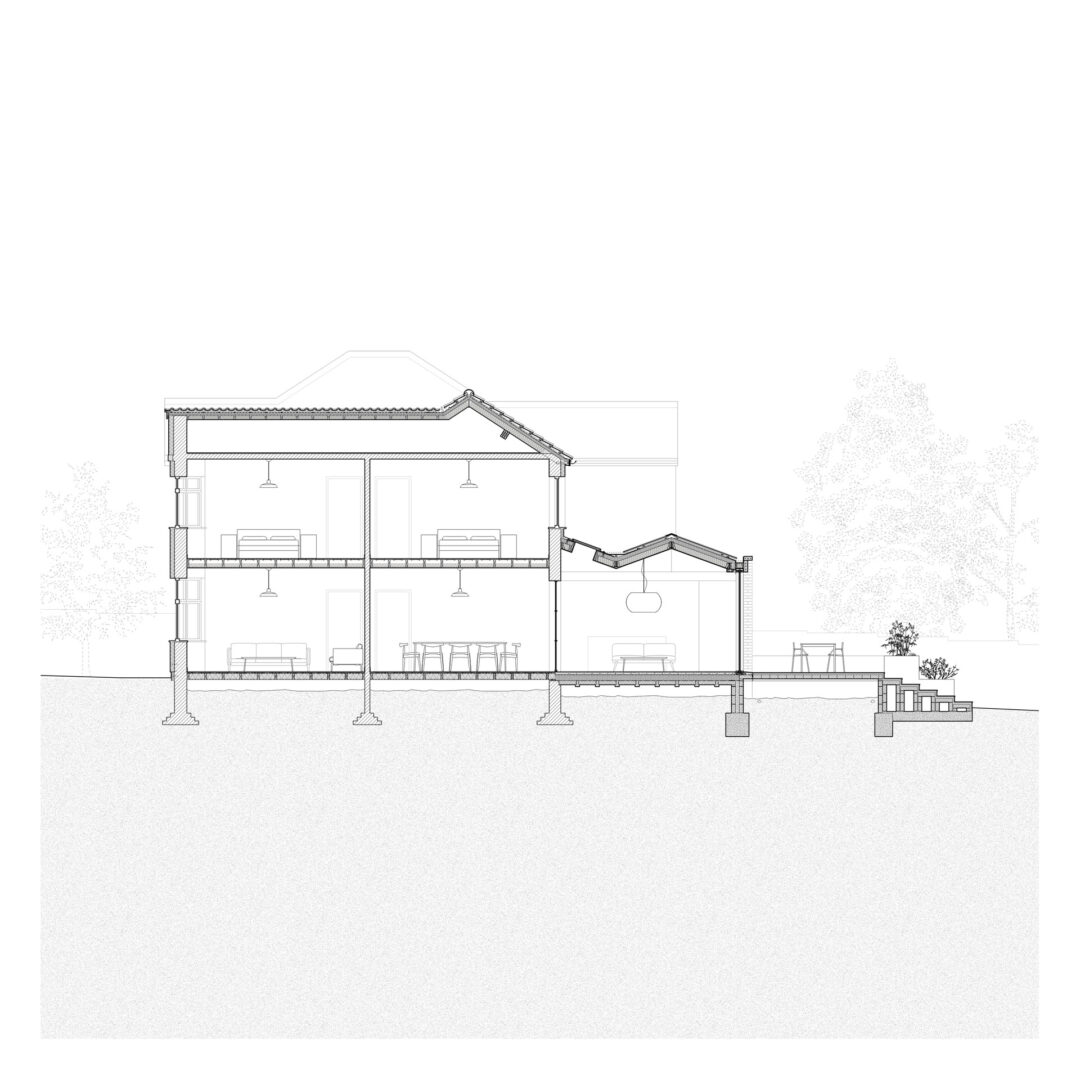
This two-storey rear extension reconfigures a traditional 1930s suburban home through a series of interventions designed to maximise internal volume and natural light. At ground floor level, the design unifies a previously fragmented plan, creating an expansive open-plan living space that connects to the garden via an external terrace and stepped brick planters.
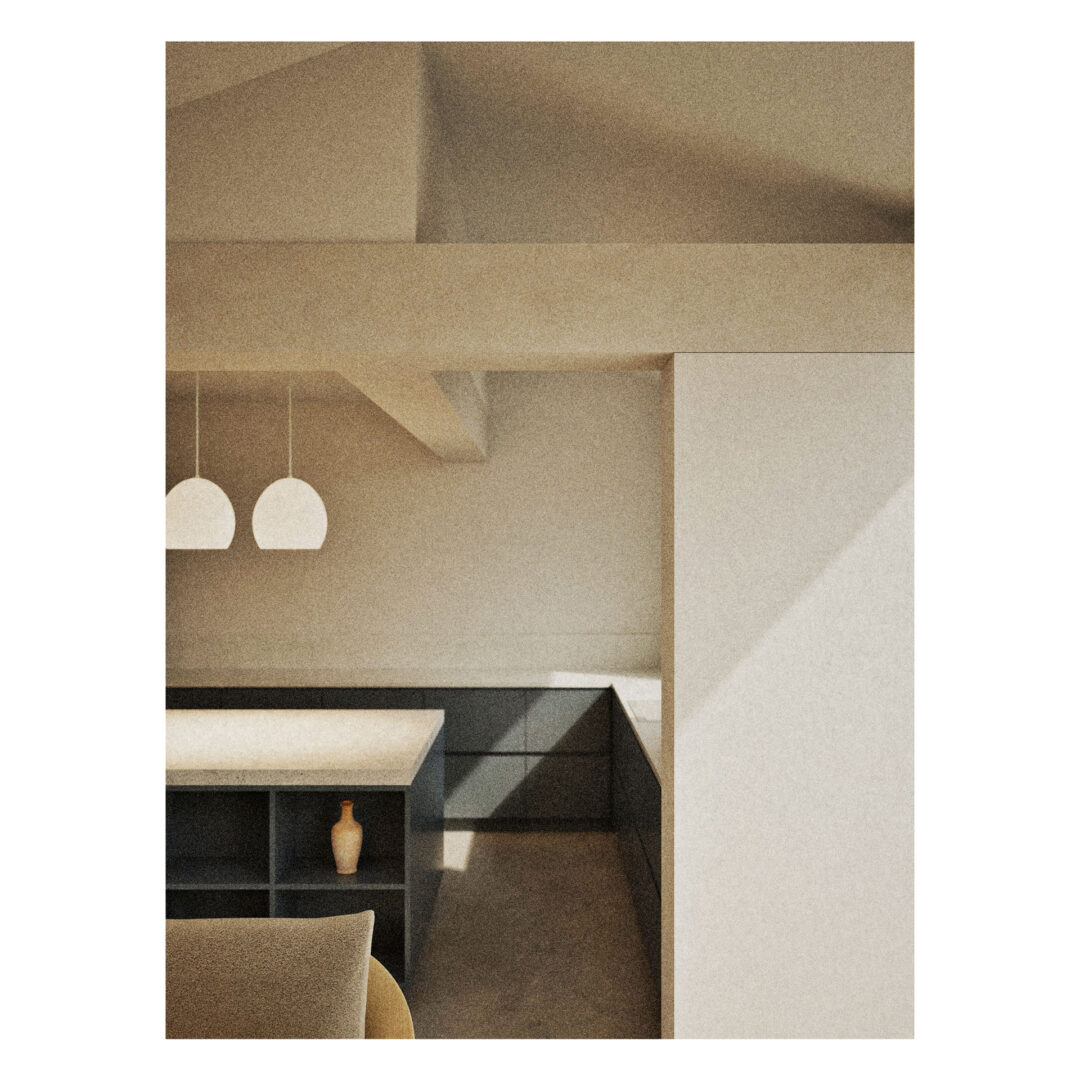
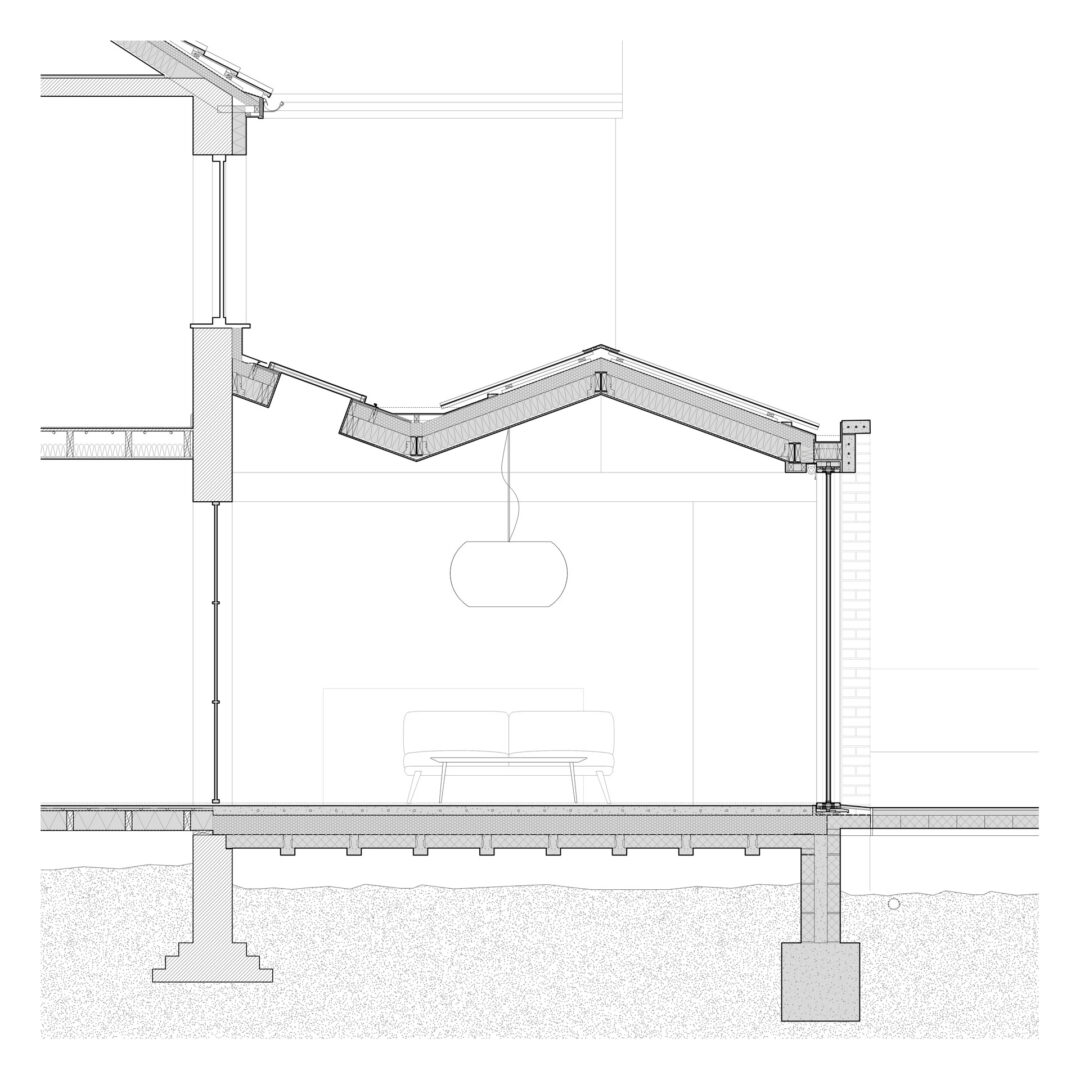
The architectural character is defined by a zig-zag roof profile that mediates between the heavy masonry of the original dwelling and the terraced landscape beyond. By adopting this pleated form, the extension achieves generous clerestory level ceiling heights whilst maintaining a respectful, low-slung profile at the site boundaries.
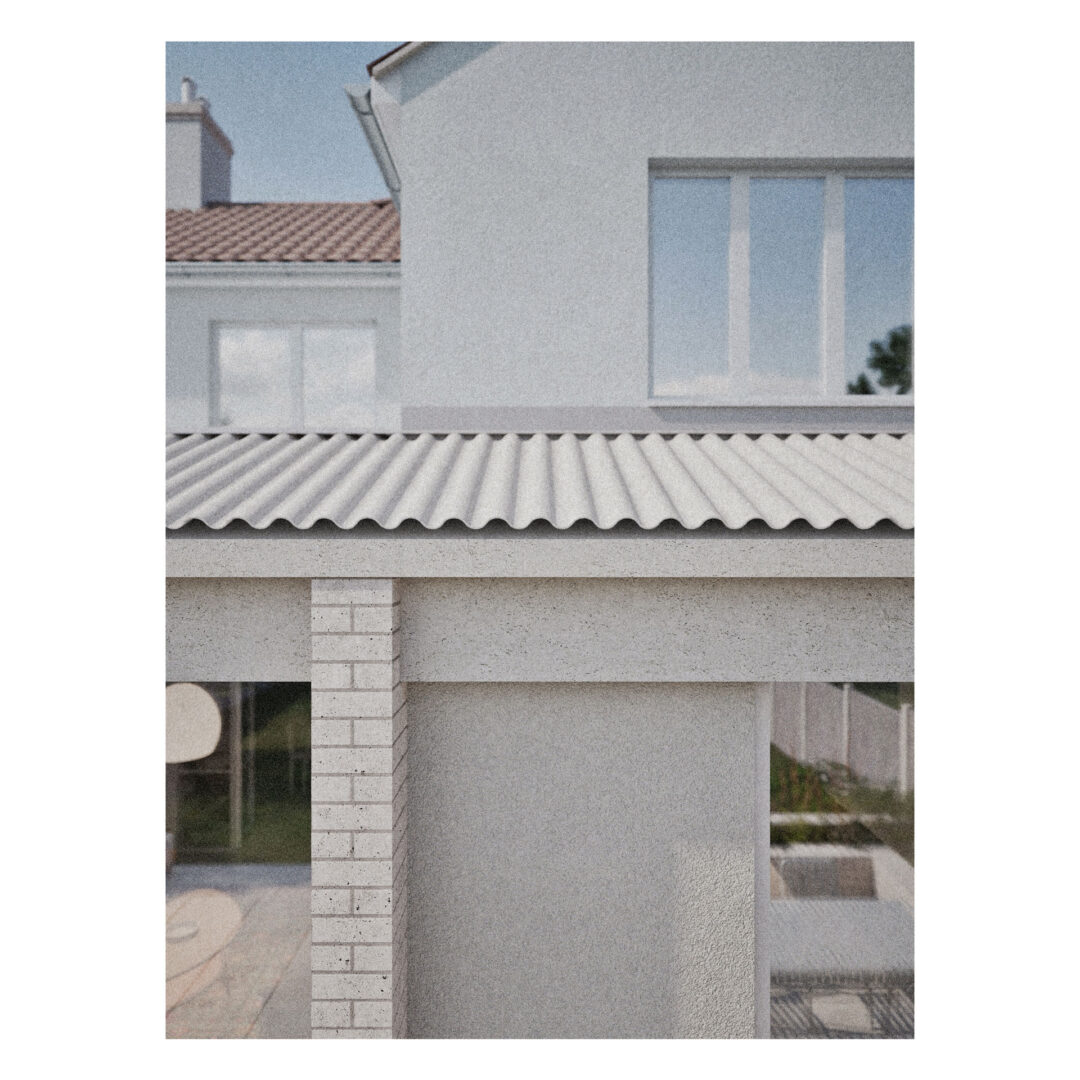
On the rear elevation, a dialogue is established between horizontal and vertical planes. Vertical brick piers establish a rhythmic cadence that expresses the internal structural logic, while a series of exposed, fair-faced concrete lintels serve as a strong horizontal datum. These structural elements stretch across the façade to unify the varied openings and provide a sense of weight. This horizontal logic is echoed in the landscape, where wide steps negotiate the rising garden levels to anchor the building to its site.
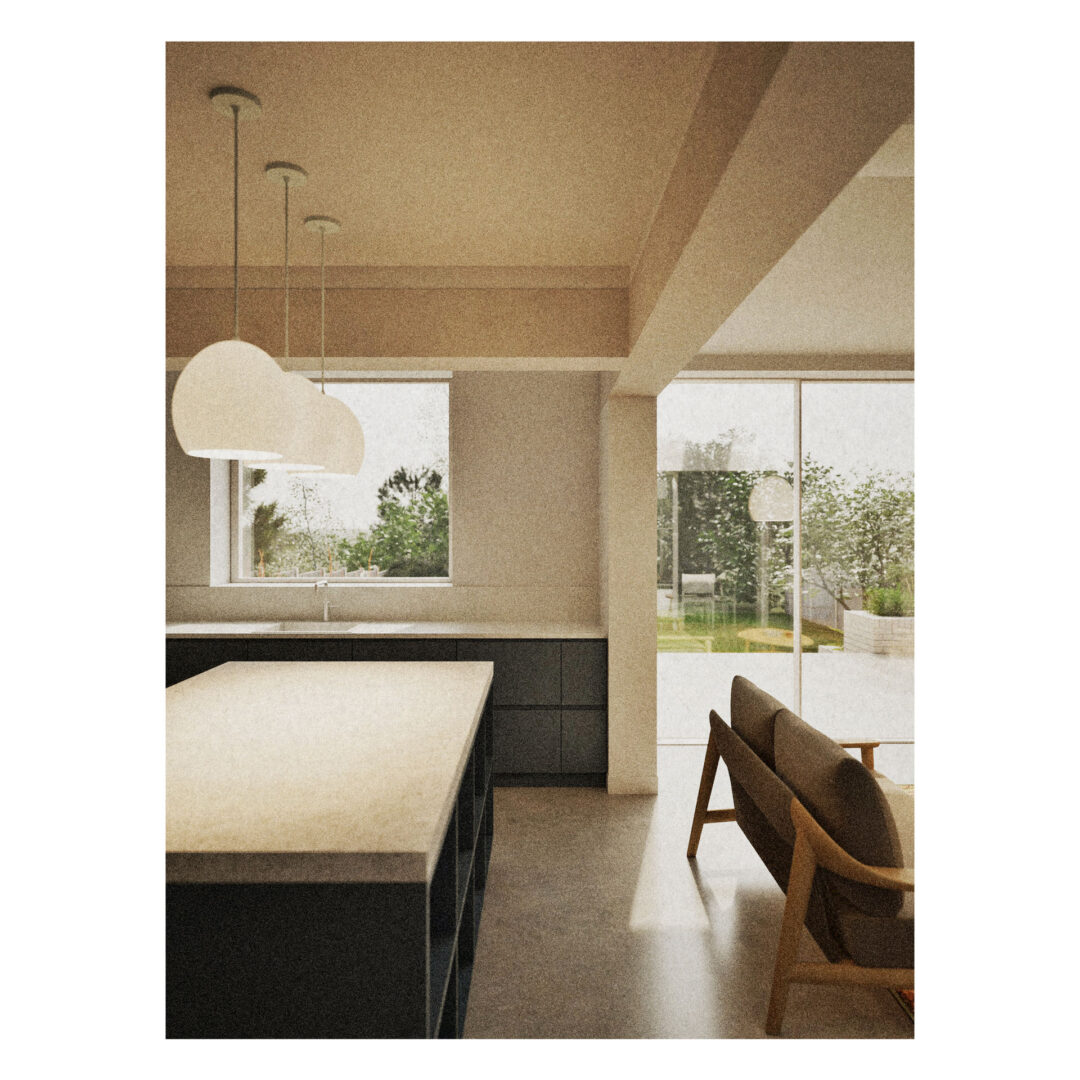
The architectural language is one of material honesty and tonal restraint. A monochrome palette is employed throughout the new addition, utilising warm grey brickwork, rough cast render and raw concrete. In contrast, the interior offers a sharp, clean aesthetic; dark-stained cabinetry and a monolithic kitchen island are set against neutral, light-toned walls to create a calm and focused sanctuary. The result is a series of interconnected spaces that serve as a quiet backdrop to the rituals of daily family life.